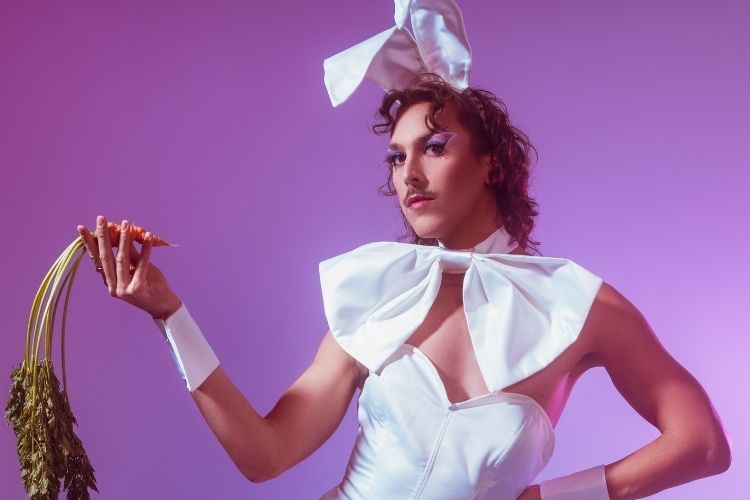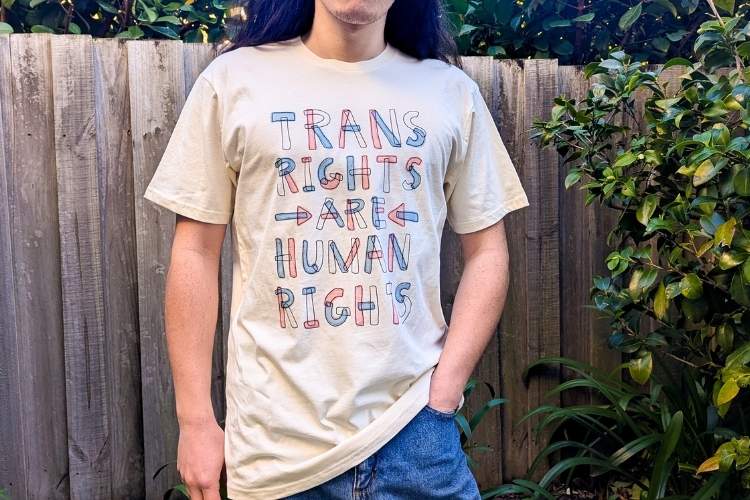
Lonely Kids Club (LKC) was founded by Warwick Levy in 2011. Warwick had an unhealthy addiction to t-shirts, and eventually, he decided to drop out of the construction degree he was studying, head over to Europe for a bit, and he returned with the idea to launch a gender neutral clothing brand, and pursue his dream.
The brand is kept alive by the support it receives, and has a mission of remaining ethical and sustainable. Rather than mass-producing seasonal ranges, Lonely Kids Club prints garments only once they’ve been ordered. They use ethically sourced AS Colour garments and water-based OEKO TEX certified inks.
On top of being accessible for all, Lonely Kids Club is LGBTQIA+ owned – and everyone working at the brand falls under the queer umbrella. Earlier this year, LKC did a fundraiser for A Gender Agenda, and they have an entire range catered to the LGBTQIA+ community.
Here, we chat to Lonely Kids Club owner Warwick Levy about the brand, its mission, and its commitment to inclusivity and creating a safe, supportive space.
Lonely Kids Club is celebrating 15 years! What does that milestone mean to you, and did you ever imagine the brand would still be going strong 15 years later?
Honestly, it’s a bit surreal. I started LKC in 2011 because I wanted to make t-shirts, and the early years involved a lot of markets, selling outside gigs and freelance work to keep myself going. I definitely wasn’t sitting there with a 15-year business plan. I’m proud that we’re still independent and doing it ourselves. There are four of us including me in our Artarmon studio, printing and packing the orders. People have kept coming back and supporting the artists we work with, which is what has kept us here. I still get to make very silly shirts for a living. That’s pretty good.
You started LKC as a gender-neutral clothing brand back in 2011. What made that important to you from the beginning?
I’ve never understood why a drawing on a t-shirt needs to be labelled for men or women. If you like it and it fits the way you want, you should be able to wear it. So we’ve had one range from the beginning, with different fits people can choose from. I don’t want anyone feeling like they’re shopping in the wrong section. Clothes helped me feel more like myself when I was younger, and I wanted to make things that could do that for other people too.
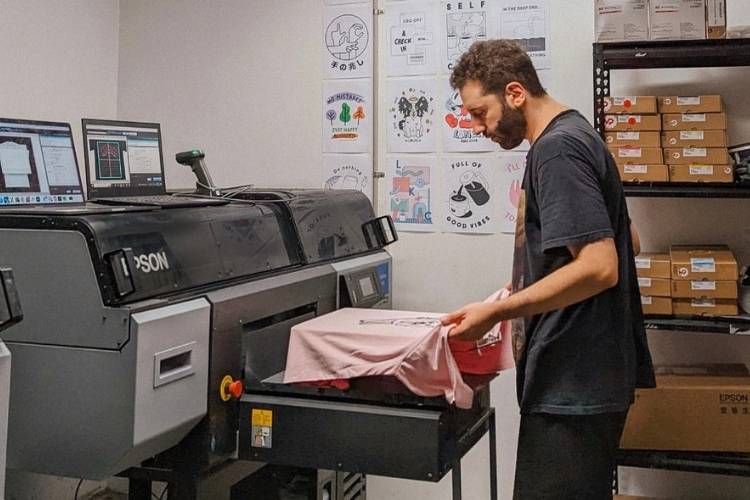
Warwick Levy at Lonely Kids Club
LKC has always had a strong focus on individuality, self-expression and creating a space where people can feel welcome. How has that philosophy shaped the brand as it has grown?
It’s given us room to make things that are quite specific. Someone might connect with a design about their identity, someone else with a mental health message, and someone else just really likes bin chickens. There’s room for all of that. We also work with independent artists, including queer and non-binary artists, who bring their own ideas and experiences to the range. They keep the rights to their work and receive a commission from sales. I want the people making the art to benefit from it.
As an LGBTQIA+ owned brand, what does the queer community mean to Lonely Kids Club, both as part of your customer base, and as a community you’re part of?
It’s very close to home. I identify as demisexual, and everyone in our current team is part of the LGBTQIA+ community. A lot of the artists we work with are too. So it’s part of the everyday life of the brand. It shapes the things we make, the causes we support and how we want people to feel when they find us. I want someone to be able to look at our range and find something that feels like them, without having to explain or justify who they are.
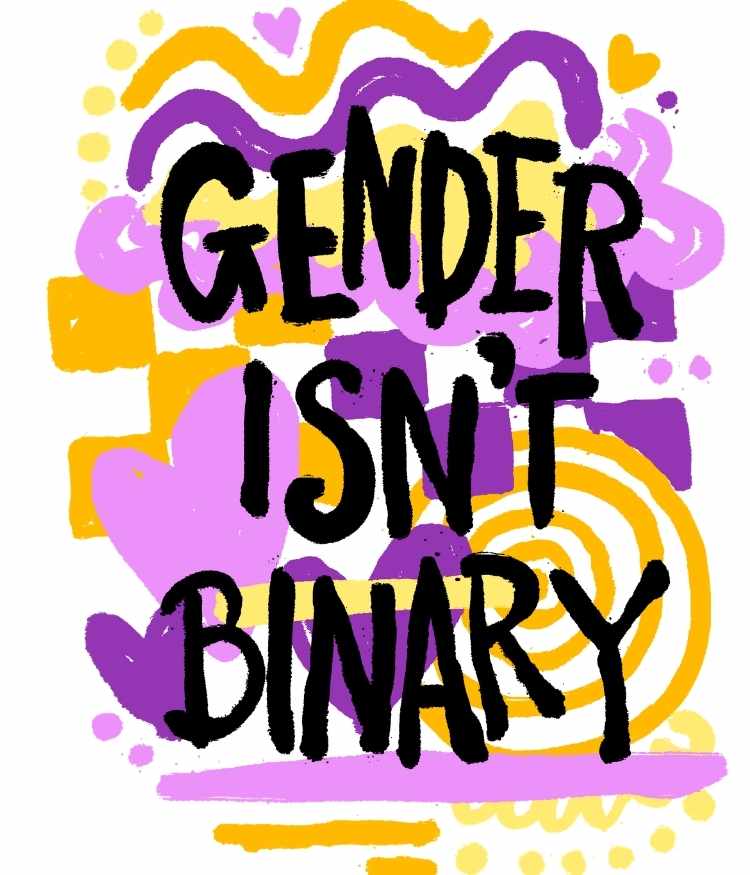
'Gender Isn't Binary' shirt artwork by Claire Harrison
You have a large range of clothing specifically celebrating LGBTQIA+ identities, as well as doing things like fundraising for trans organisations such as A Gender Agenda. Why is it important to you to put that support into action rather than just making Pride-themed clothing?
Because there are organisations doing work that people actually need, and we can help support that through the business. For Trans Day of Visibility this year, we ran a fundraiser with 100 per cent of profits from all sales site-wide going to A Gender Agenda. That included everything, not just the Pride range. We also ran a site-wide fundraiser for them during Trans Awareness Week in 2025, which came about after our artist Jaimie McCaw asked if we could support them. We’re a small business, so we have to work within what we can afford. But if people are supporting us, I want some of that support to go back into the community.
Have there been any particular moments, messages from customers or experiences over the past 15 years that have reminded you why the queer and gender-neutral side of LKC matters?
Two people who have worked at LKC have transitioned, either while they were with us or after they left. I’ve only had ten employees in total over the years, so it’s something that’s very close to home. Their stories are theirs to tell, but it does remind me why this matters beyond what’s printed on a shirt. I want someone buying clothes from us, or turning up to work here, to feel comfortable being themselves. It makes the idea of having a welcoming space feel very real.
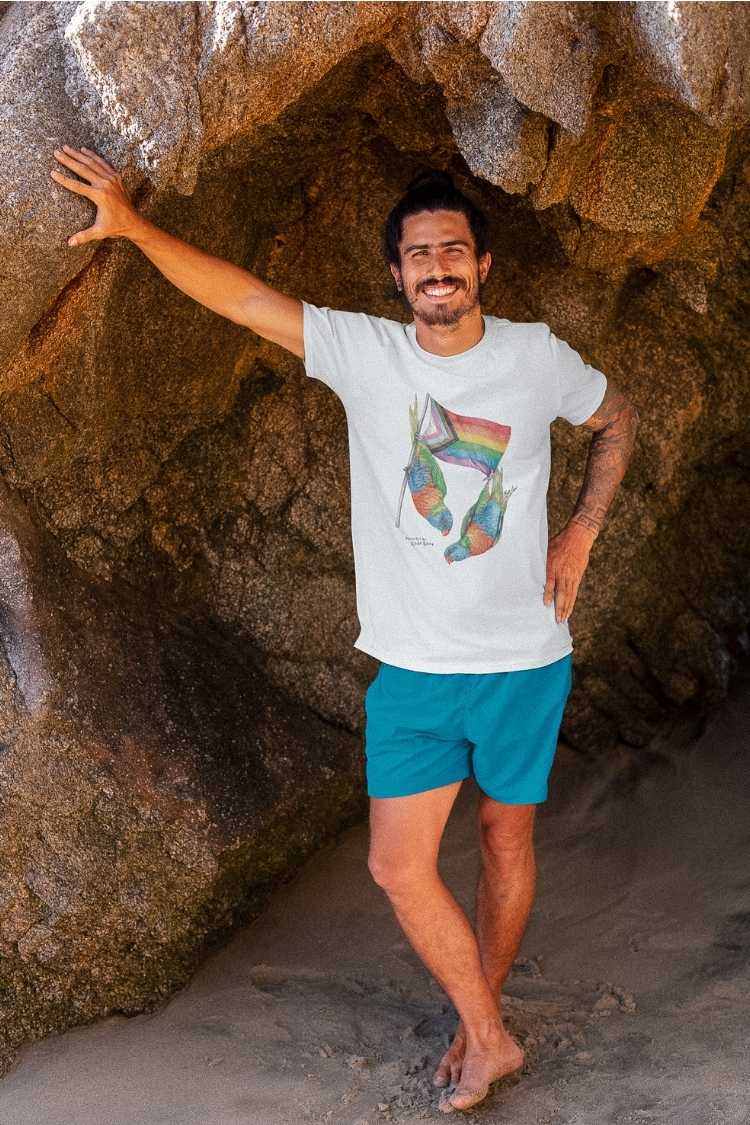
Shirt artwork by Kayla Reay
Fashion can sometimes feel very trend-driven and disposable. How do your ideas around ethical production, slow fashion and independence fit alongside your mission of creating clothing that people can use to express who they are?
Printing to order gives us a lot of freedom. We don’t have to make hundreds of a design and hope it sells, so we can keep something available even if it only speaks to quite a small group of people. That works really well for a range built around individual expression. We use ethically sourced blank garments, mostly from AS Colour, and print them ourselves in Sydney using water-based inks. The blanks are made overseas, and we do the printing and packing here. It reduces the amount of unsold printed stock we’re sitting on. Staying independent also means I can keep making those decisions, including paying staff properly and paying artists for their work.
Looking ahead to the next 15 years, what do you hope Lonely Kids Club continues to stand for. . . And what would you love the brand to be able to do for its community moving forward that it can’t do today?
I’d like us to keep being somewhere people can find clothes that feel like them, and somewhere artists can get paid to make things they care about. I’d love to have more money available for artist collaborations and bigger community fundraisers. There’s a lot I’d like to do, but we’re still a very small team and have to keep the business going too. If we can still be here in another 15 years, independent, looking after the people involved and helping people feel a bit more comfortable being themselves, I’d be pretty happy with that. There will almost certainly be more birds.
Lonely Kids Club tees are available now.